Understanding Medical Diagnosis, Educational Determination, and Screenings
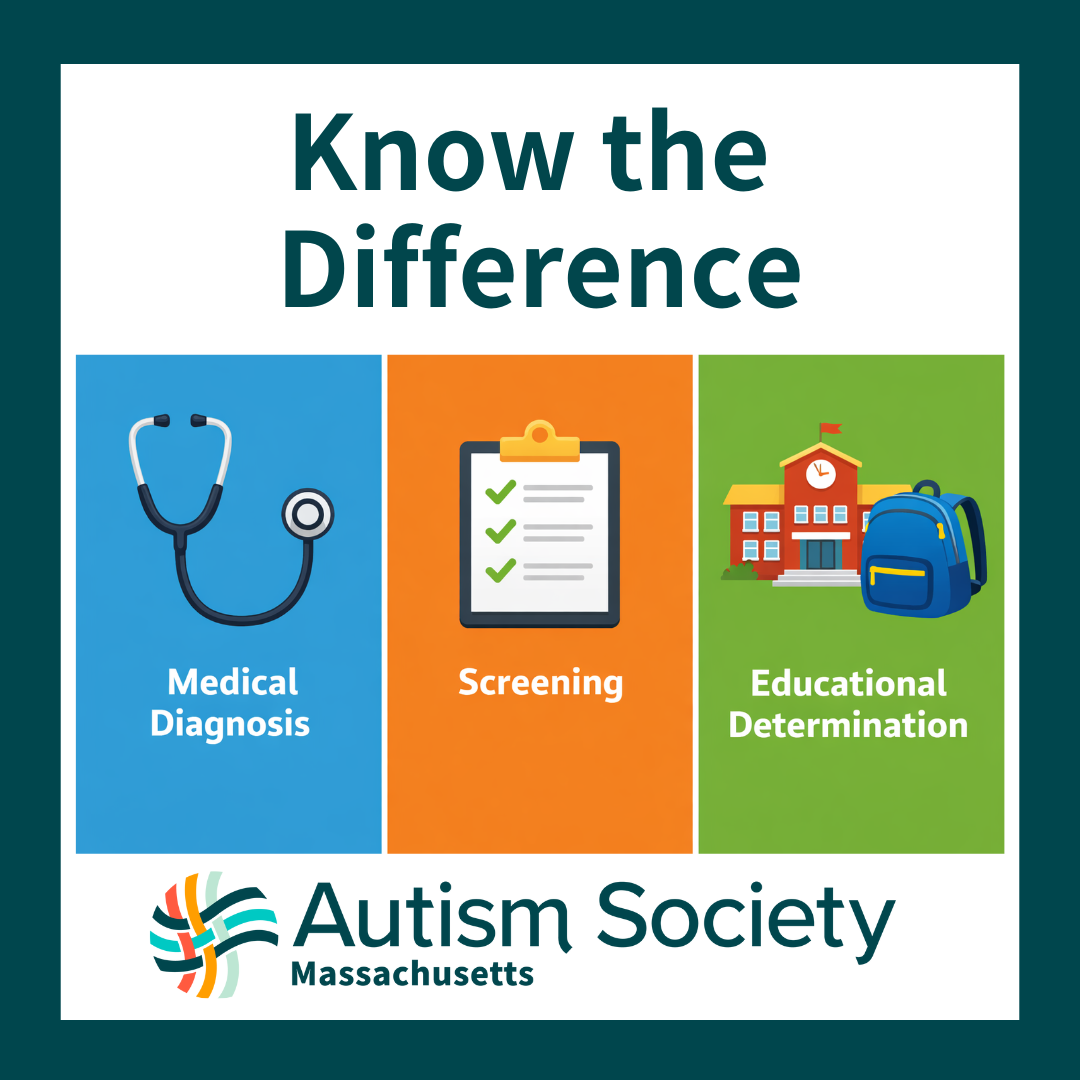
Families often hear terms like medical diagnosis, educational determination, and screening when Autism is first suspected or discussed. While these terms are sometimes used interchangeably, they serve very different purposes. Understanding the differences can help families better navigate evaluations, access supports, and advocate for their child or loved one.
Below is a breakdown of what each term means, who completes it, and how it impacts access to services.
Autism Screenings
Screenings are brief tools used to identify whether a child may be at risk for developmental delays or Autism and whether further evaluation is needed.
Early identification is critical. Research consistently shows that early intervention leads to better outcomes for individuals with Autism.
When Screenings Are Recommended
The Centers for Disease Control and Prevention (CDC) recommends that all children be screened for Autism by their pediatrician at:
9 months
18 months
24 or 30 months
If Autism is suspected, intervention should begin as early as possible, even before a formal diagnosis is made.
Common Screening Tools
While screenings do not diagnose Autism, they help determine whether additional evaluation is needed. Common screening tools include:
Ages and Stages Questionnaire (ASQ)
Modified Checklist for Autism in Toddlers (M-CHAT)
The CDC’s Learn the Signs. Act Early. initiative offers valuable information about early signs of Autism and developmental milestones.
Medical Diagnosis of Autism
A medical diagnosis of Autism Spectrum Disorder (ASD) is made by a qualified medical or clinical professional, such as a psychologist, developmental pediatrician, neurologist, or other specialized physician. This diagnosis is based on a comprehensive assessment of symptoms and developmental history.
Medical professionals most commonly diagnose autism using criteria from the Diagnostic and Statistical Manual of Mental Disorders, Fifth Edition (DSM-5), published by the American Psychiatric Association. The DSM-5 provides specific diagnostic criteria that clinicians use to determine whether an individual meets the definition of Autism Spectrum Disorder.
What a Medical Evaluation May Include
A medical assessment for Autism often gathers information from multiple sources and may include:
Medical history, including the mother’s pregnancy
Review of developmental milestones
Sensory differences or challenges
Medical history such as ear infections, seizures, or other conditions
Family history of developmental, genetic, or metabolic disorders
Assessment of cognitive functioning
Assessment of language and communication skills
Autism-specific observations, interviews, or rating scales
The evaluation process can look different depending on the individual’s age, strengths and needs, the professional completing the assessment, and the resources available in the community.
Diagnostic Tools
There is no single test that can diagnose Autism. Instead, clinicians use a combination of tools as part of a broader evaluation. Common diagnostic tools include:
Autism Diagnostic Observation Schedule, Second Edition (ADOS™-2)
Autism Diagnostic Interview (ADI)
Screening Tool for Autism in Toddlers (STAT)
Childhood Autism Rating Scale (CARS)
Tele-ASD-Peds (used in telehealth settings)
These tools are not usually used on their own. A medical diagnosis is most accurate when it is based on multiple sources of information and professional judgment.
A medical diagnosis is often required to access services and supports outside of school, such as therapies covered by private insurance or state services.
Educational Determination of Autism
An educational determination is made within the school system and focuses on how a disability impacts a student’s ability to access and make progress in the educational environment.
This determination is completed by a multidisciplinary school evaluation team, which may include special educators, school psychologists, speech-language pathologists, occupational therapists, and other school professionals. Parents or caregivers are key members of this team.
Under the Individuals with Disabilities Education Act (IDEA), the team reviews evaluation results to determine whether a student qualifies for special education and related services.
Important Things to Know
An educational determination qualifies a student for supports within the school setting, such as an Individualized Education Program (IEP).
An educational determination is not the same as a medical diagnosis.
A school-based determination does not typically provide access to therapies or services outside of school that are covered by insurance or MassHealth.
A medical diagnosis of autism does not automatically guarantee that a student will qualify for special education services under IDEA.
The school’s focus is on educational impact, not medical criteria.
When Should Families Consider Each?
Families often wonder when to pursue a screening, medical diagnosis, or educational determination. While every child and family is different, the guidance below can help clarify when each pathway may be appropriate.
Screening
Families should consider screening when:
A child is under the age of 3 and is attending routine pediatric well-child visits
A parent, caregiver, or early childhood provider notices developmental differences or delays
A child is not meeting expected communication, social, or play milestones
Screenings are especially important in infancy and toddlerhood. They are designed to flag concerns early and should be the first step when autism is suspected. If a screening raises concerns, families should move forward with further evaluation and begin early intervention supports as soon as possible.
Medical Diagnosis
Families should consider pursuing a medical diagnosis when:
A screening or early intervention provider raises concerns about Autism
A child is showing ongoing social communication differences or restricted/repetitive behaviors
Access to therapies, insurance-covered services, or state-funded supports is needed
A clearer understanding of a child’s strengths and needs would support long-term planning
A medical diagnosis can be pursued at any age and is often an important step in accessing services outside of school and across the lifespan.
Educational Determination
Families should consider an educational determination when:
A child is approaching age 3 and transitioning from Early Intervention to preschool
A student is struggling to access or make progress in school due to developmental, communication, or behavioral differences
School-based supports, accommodations, or an Individualized Education Program (IEP) may be needed
An educational determination focuses specifically on how a disability impacts learning in the school environment and should be revisited whenever educational needs change.
Why the Differences Matter
Understanding the difference between a medical diagnosis, an educational determination, and screenings can help families:
Know what type of evaluation to pursue
Understand why eligibility for services may differ across settings
Advocate more effectively for supports
Access services earlier, when they can have the greatest impact
Each pathway plays an important role in identifying autism and supporting individuals across the lifespan. Families often benefit from using all three at different points in their journey.